
As the sales have come in for 2025, all things considered they are damned good, perhaps worthy of some champagne-cork popping (or at the very least the opening of a screw-top bottle of some top-shelf jug wine).
Consider:
· 2024: 16 million
· 2023: 15.1 million
· 2022: 13.7 million
· 2021: 14.9 million
· 2020: 14.6 million
Which tells us that COVID and supply chain issues had a bigger effect on US light vehicle sales than tariffs.
At least so far.
Although the number is on the order of 16.3 million in an industry where people still remember “17” (and let’s face it, the population isn’t shrinking), in retrospect, that is a sold number.
That is, as is widely accepted, there were “pull-ahead” purchases of new vehicles. The topic of 25% tariffs on vehicles from Mexico and Canada were first raised by President Trump in February, and although they didn’t happen, by the end of March Trump signed an order calling for a 25% tariff on imported autos and certain parts, based on Section 232, which deals with national security.
As a proclamation from the president on March 26, 2025, has it:
“Today, only about half of the vehicles sold in the United States are manufactured domestically, a decline that jeopardizes our domestic industrial base and national security, and the United States’ share of worldwide automobile production has remained stagnant since the February 17, 2019, report.” (The president had asked the Secretary of Commerce to look into the auto industry for potential 232 tariffs during his first term, which led to that report.)
Somehow this says more about consumer choice and OEM decisions than anything else. If someone wants a BMW 3 Series, then that’s what they want, and a Cadillac CT4, say, isn’t. (And BMW makes some 400,000 SUVs per year in South Carolina, so it is a good corporate citizen that is contributing to our domestic industrial base.)
But earlier last year, with the threat of impending tariffs, people made their way to their local Chevy and Ford dealers, not realizing that they were making purchases on behalf of our national defense, but doing so because they figured the prices would go up even higher than they were at that point.
In March, according to Kelley Blue Book, the average transaction price (ATP) for a new vehicle was $47,462. By November that reached $49,814, or a 5% increase
Certainly that rise in and of itself is not a big deal. But an issue is that OEMs have been absorbing some of the additional costs associated with the tariffs on parts and materials, and at some point that’s not going to be something their investors are going to be particularly happy about.
Remember: there are 50% tariffs on imported steel and aluminum that have been in effect since early June, and while there is significant steel production in the US, when it comes to aluminum, Canada produces some five times more than the US. While “aluminum-intensive vehicles” don’t get the discussion they once did primarily because there aren’t a whole lot of aluminum-intensive models, the Ford F-150, Chevy Silverado, and GMC Sierra are aluminum-intensive and their numbers are certainly high, which means a whole lot of aluminum.
Toward the end of the middle third of the year there was another rush of buyers into dealerships who were interested in getting an EV before the $7,500 federal tax credit ended on September 30, 2025, not December 31, 2032, when it was originally supposed to end.
Companies reported record high EV sales. Until they didn’t.
When Ford closed its books for 2025 sales, it calculated that it had sold 84,113 EVs. That would be the Mustang Mach-E (51,620), the F-150 Lightning (27,307) and the E-Transit (5,186).
To put that 84,113 into some context, know that it sold 85,921 Expeditions in 2025. Certainly there were some solid margins on one of the four vehicles in question.
Meanwhile, across town, GM reported a 48% increase in EV sales in 2025 compared to 2024.
But then there’s this to take into account: GM had a whole lot more EV models than Ford did, so its 169,764 total is not as robust as that 48% increase implies.
The single best-selling model was the Chevy Equinox EV, with sales of 57,945. Then the number drops to 22,637 for the Blazer EV.
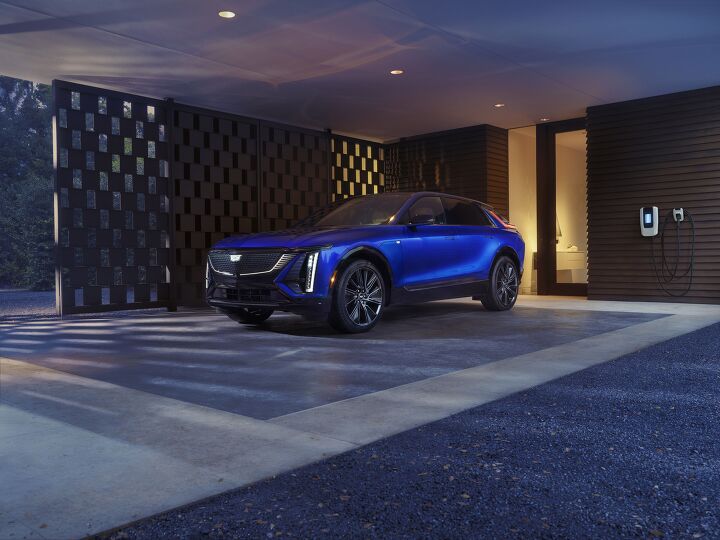
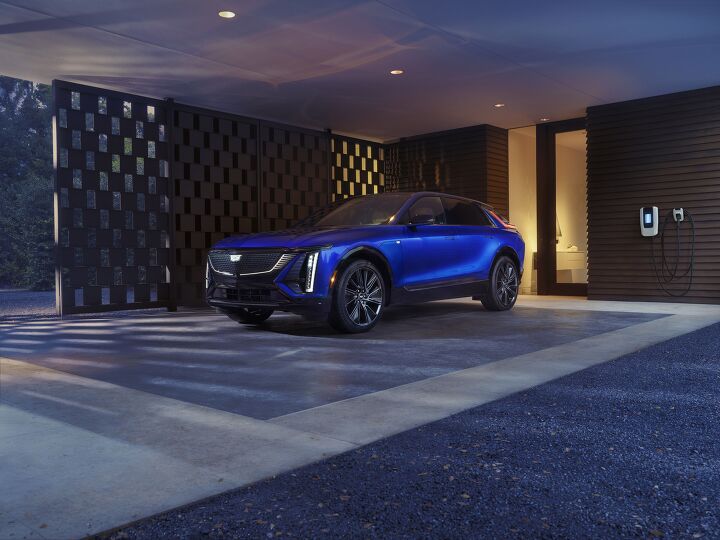
The other EV models are the Cadillac Escalade IQ (8,115), Lyriq (20,971), Optiq (12,187), Vistiq (7,879), Silverado EV (11,275), HUMMER EV (15,788), Sierra EV (7,996), and BrightDrop 400/600 (4,971).
That’s a lot of vehicles with comparatively low production runs.
While the Equinox EV is a fine electric vehicle, put its 57,945 into relation to the next vehicle that is alphabetically on the list of vehicles produced by Chevrolet: the Express, a full-size body-on-frame cargo or passenger van or cutaway chassis vehicle that had sales of 58,578. Yes, 633 more units.
The Express was launched in 1996 and has reportedly not had a whole lot in the way of significant changes since. Again, one has to think that GM makes money on all of those Express models it sells.
Needless to say, there was something of a pivot away from EVs announced as 2025 drew to a close, including billions of dollars in charges being taken by companies as a result of their once-anticipated big volumes of EV sales.
To put the EV sales of Ford and GM for all of 2025 into context, the sum of the EVs sold by both is 253,877.
The sum of the Ford Escape and Bronco Sport vehicles—both of which share the same platform—is 273,880.
So those two ICE models outsold 10 GM models and three Ford models.
Or the combined 253,877 can be compared with the sales of one model: the Chevy Equinox (ICE, not EV): 274,356.
The market clearly isn’t all that interested in electric vehicles without some serious financial sugar from the government, but it is interested in electrified vehicles, as in hybrids.
In its 2025 sales, Toyota reported that between its Toyota and Lexus brands it sold 1,161,029 hybrids. That’s about 47% of all the vehicles it had on offer.
Toyota sold 316,185 Camrys—all hybrids.
Taking trucks out of the picture, the closest Ford came to 316,185 is 222,706 for the Explorer, which is not a hybrid unless you are a member of a police department.
The closest GM came to the Camry number, again not counting trucks, is the aforementioned Chevy Equinox at 274,356.
No one wants to buy sedans, yet there’s the Camry. (It also sold 248,088 Corollas, of which about a fifth (50,245) were hybrids.)
And while the likes of GM and Ford were barreling full forward on EVs and Toyota was being criticized for being a laggard in that space (the Toyota bZ and the Lexus RZ didn’t exactly send sparks flying in the dealerships, with sales of 15,609 and 6,400, respectively), seems that Aesop’s “slow and steady wins the race” still holds true.
As there is a switch to more concentration on hybrids, Ford is in better shape than GM, as it offers hybrids in the Maverick and F-150 (there was one in the Escape, which went out of production in 2025) and in the Lincoln Nautilus (there was one in the Corsair, but that model ended along with the Escape).
GM? Corvette E-Ray. Which is hardly what anyone thinks of when the word “hybrid” is uttered. (Although it is a lot of fun to drive.)
It is thought that this year will have its number trimmed back to some 15.8 million because of all of those pull-forward sales. But that number still puts it toward the top of the 2020s. And if people get big tax refunds thanks to the tax bill signed last year, maybe they’re going to be inclined to buy a new vehicle, which could boost that number a bit.
Could.
Fingers crossed.
Long-time automotive journalist Gary Vasilash is co-host of “Autoline After Hours” and is a North American Car, Truck & Utility of the Year juror. He is also a contributor to Wards Auto and a juror for its 10 Best Interiors UX and 10 Best Engines & Propulsion Systems awards. He has written for a number of outlets, ranging from Composites Technology to Car and Driver.
The TTAC Creators Series tells stories and amplifies creators from all corners of the car world, including culture, dealerships, collections, modified builds and more.
Check out Gary’s Substack here. Republished with permission.
[Image: Cadillac]
Become a TTAC insider. Get the latest news, features, TTAC takes, and everything else that gets to the truth about cars first by subscribing to our newsletter.
